
About This Generator
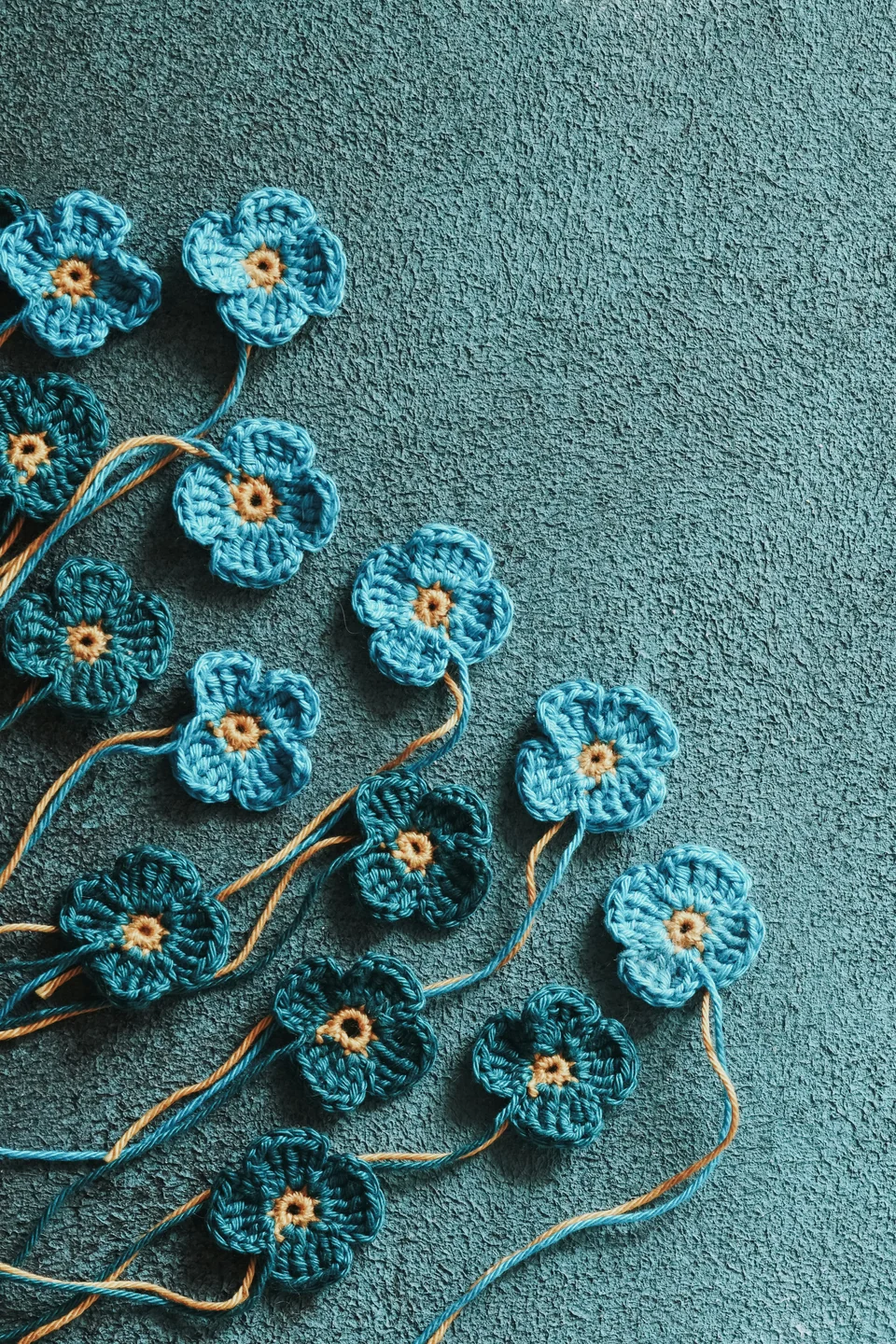
The Applique Motif Generator creates counted flowers, a rolled rose, a four-wing butterfly, a two-sided leaf, a turned-cap mushroom, a ring-centered heart, a daisy, a picot-point star, a flat embroidered face and a defined garden collection. Use these original constructions as decorative studies or separately sewn embellishments. Every supported type has its own start, insertion sources, counts and finishing rules. Actual appearance, dimensions and attachment strength require a physical trial. The original adjustable flower remains available for older saved projects.
How to Use This Generator
Choose Applique construction first. Flower petals (original mode) controls four through ten center stitches and petals only in the original mode. Rolled rose shell petals controls three through twelve shells in the rose. Other named constructions use their own fixed counts or component recipes. Choose enabled yarn roles and US or UK terms, regenerate and read every component start. The output includes a component construction and sewing guidance rather than a garment attachment pattern tailored to a particular fabric. Check the Materials and notes as well as the numbered operations.
Use Symbol Chart and Stitch Preview to understand the component, but use Written Pattern for the actual chain and shared-base sequence. Save project keeps a browser-local copy of the selected count. Export JSON provides a portable parameter record; Export SVG provides a scalable diagram. Print can give you a paper reference or a PDF through the browser destination. Save a project before changing the petal number if you want to compare several trial flowers.
Understanding the Crochet Pattern
Each petal begins in one center sc and returns to that same receiving stitch. Chain two creates height, three dc form the body, another chain two lowers the edge, and a slip stitch closes the petal. The petal's chains are part of its outline and should not be mistaken for extra center receiving stitches. A slip stitch used as the petal closure is also different from the initial round's joining slip stitch, whose purpose is simply to close the ring and is excluded from the center count.
How the Generator Works
For n petals, the engine starts with n sc in a magic ring. It then repeats the supported petal sequence once in each of those n center bases. The petal round contains three times n dc, n closing petal slip stitches, and four times n chains. Its count field reports the four times n completed non-chain operations, with chain totals described separately. The output also supplies an assembly list explaining attachment through the center and petal bases. It does not calculate a fabric-specific sewing allowance or confirm the flower's finished diameter.
Step-by-Step Worked Example
Choose Original flower and set Flower petals (original mode) to 6. Make a magic ring, chain one without counting it, and work six sc. Join to the first actual sc and tighten the ring. In each of the six old sc, work chain two, three dc, chain two, and a slip stitch into that same base. The finished petal round contains eighteen dc, six petal slip stitches, and twenty-four chains. Lay out all six petals before fastening and attaching the flower. Sew through the back of the center and the bases so the visible petal tops can remain open.
Comparing Source Structures
The leaf starts from eight chains, skips the nearest lift chain and works both sides of seven receiving chains, producing three outputs at each tip. The mushroom combines a true turned half-disk cap with a separate rectangular stem; four named row-end anchors locate their seam. It does not invent stitch positions along a folded edge. The star records its picot-closing slip stitches separately from its decorative chains, with real chain insertion sources.
The heart places thirteen tall posts and one closing slip stitch in a magic ring, with eight additional chains. Daisy and five-petal flower retain different center counts. The flat face has a counted disk, two folded ears and explicit embroidery references. The garden collection supplies two flowers, two leaves and one butterfly as separate pieces. Compare each component heading and quantity before interpreting a total workload. The source-connected Symbol Chart and loop schematic describe these operations; neither view is a real photograph or a prediction of finished fabric.
Download this worked example as JSON. Restore it in this generator to compare the actual counts and structure.
Practical Tips
Use a smooth yarn for the first sample and leave a sewing tail suited to the intended receiving fabric. Pin the flower lightly in place before stitching so you can check its scale and orientation. Choose a needle that passes through the backing without splitting it unnecessarily. Secure the attachment with several well-distributed stitches instead of one tight central knot that allows the petals to twist. Test care compatibility between the flower and its backing.
Common Mistakes and Solutions
Two petals share a center stitch accidentally
The move to the next old sc may have been missed. Count the six original bases, mark completed petal bases, and undo the duplicate before continuing around the ring.
Petals cannot open after attachment
Sewing may have caught the visible tops or pulled the bases together too tightly. Remove the restricting stitches, repin the flower, and attach through its underside and bases with even tension.
The center appears to have an extra sc
The initial chain-one or joining slip stitch may have been counted as a receiving stitch. Count the actual sc tops, identify the join, and begin the petal sequence only in the intended center stitches.
Second Reproducible Application
Use this comparison to check how one input changes the crochet applique motif generator output. Enter petals = 7. Keep any grid and color data from the downloadable worked example unchanged. Generate again and compare the result with the first example above. The resulting dimensions are Flat flower applique: 1 pieces; measure a swatch for physical size. These depend on the entered block size, not a measured finished sample. This comparison was executed with the site's engine; it is a numerical construction check rather than a claim about physical gauge. Save both settings separately if you want to compare them later.
Related Tools and Guides
The Tools directory at /generators/ lists the available generators. Use the linked examples on this page to study the same construction with different inputs, and the Guides directory at /guides/ for supporting reading. Check terminology and measured gauge before combining output from different tools.
Frequently Asked Questions
Can I generate a leaf or butterfly here?
Yes. Select the explicit two-sided leaf or four-wing butterfly construction. The leaf works around both sides of a chain; the butterfly has four separately defined wing groups and a wrapped body. Changing the original flower petal count does not select either model.
Why does a six-petal round show twenty-four counted operations?
Each petal contains three dc and one closing slip stitch. Six groups of four give twenty-four non-chain operations; the twenty-four chains are tracked separately.
Is the flower worked in a spiral?
The center is joined, and the petals follow the stated shared-base sequence. Do not replace that construction with a continuous spiral simply because the center is circular.
Can I make it larger by choosing more petals?
That changes the number of repeated units, not a guaranteed diameter scale. Yarn, hook, petal count, and tension interact, so compare finished samples before selecting an attachment size.
Should I sew through every petal tip?
The generated assembly attaches through the back of the center and petal bases. Sewing every tip flat would change the intended appearance; assess extra attachment needs for your particular use separately.