
About This Generator
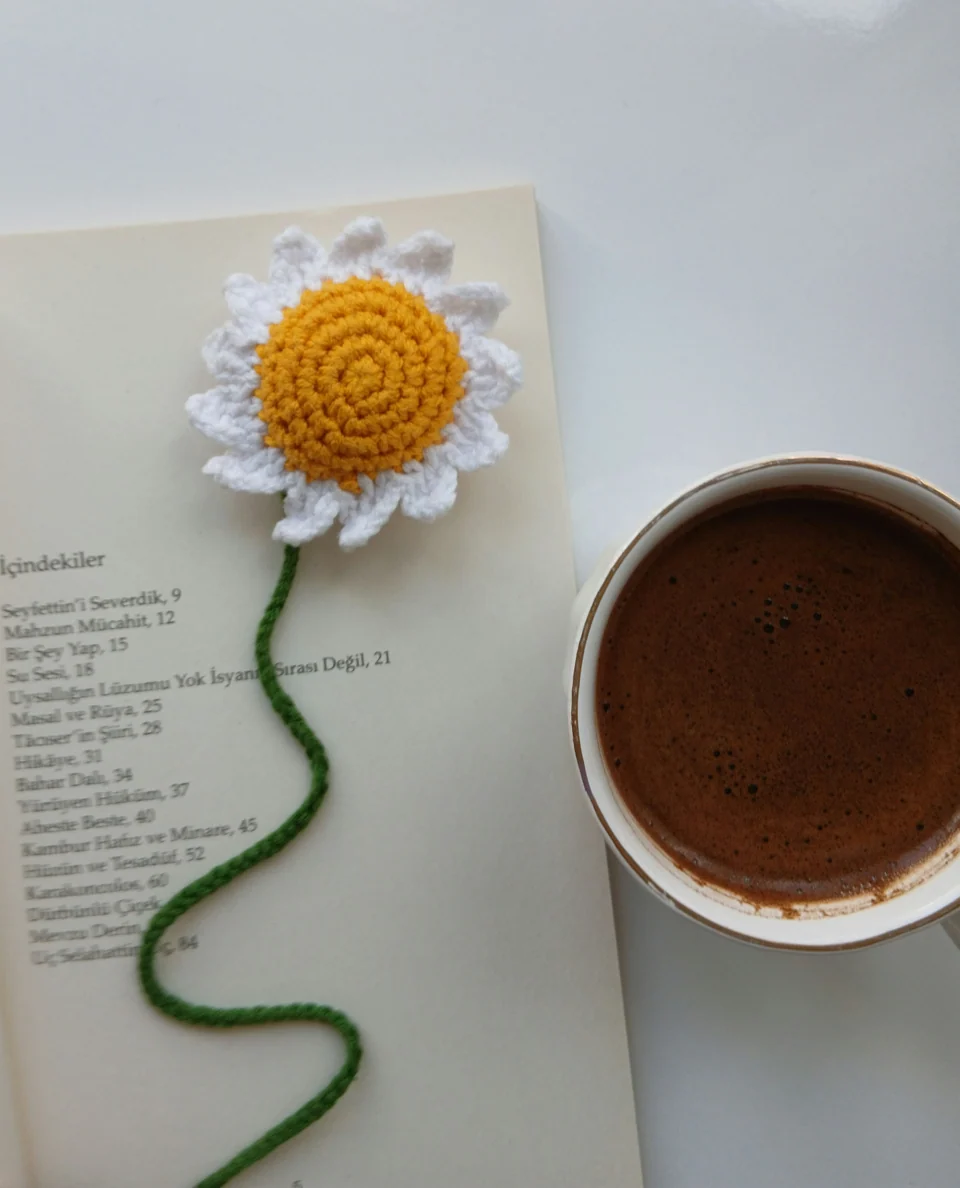
The Crochet Bookmark Generator supplies ten supported constructions with actual counted source recipes. Choose a narrow SC strip, flower topper, leaf pendant, shell-and-plain lace strip, butterfly topper, direct row-end edging, mini granny pendant, fringe strip, folded corner pocket or three-bookmark gift set. They differ in their crochet structure, component quantities and finishing. Keep bulky motifs outside the pages and evaluate the actual fabric thickness before using a bookmark in a valuable book. The original rectangular stitch-strip mode remains available for earlier saved work.
How to Use This Generator
Select Bookmark construction first. Strip width and row length affect the plain, topped, edged, fringe, corner and gift-set fabrics. Named SC strips support two through thirty stitches and six through 120 rows. The direct shell edging specifically requires thirty-six, seventy-two or 108 strip rows so its pickup count contains complete six-base groups. The fixed lace recipe is seven stitches wide and twelve rows long; its inactive strip fields do not resize it. A leaf or mini granny uses its own fixed motif recipe and an adjustable return-slip cord.
Cord foundations support twelve through eighty chains. Fringe strand cut length supports five through thirty centimeters and describes each cut strand before folding and knotting. Choose compatible yarn colors and US or UK terminology. Named constructions select their actual stitch recipe; the original rectangular mode retains its arbitrary supported stitch field. Regenerate after editing, then compare the component headings, copy quantities and separate assembly references.
Use Beginner View to follow the reading sequence and Advanced View to inspect detailed controls. Save project stores a browser-local copy. Export JSON saves the full parameters and nested recipes for restoration; maintain an external backup for important work. Undo and Redo recover supported parameter changes. Download SVG preserves a vector worksheet and its legend. Print opens the browser print dialog; inspect the actual page layout or PDF before relying on a paper copy.
Understanding the Crochet Pattern
Symbol Chart shows stitch symbols and receiving sources. Written Pattern gives the complete working route, and Stitch Preview draws corresponding loop schematics. Selecting a step locates its diagram reference and selecting the diagram locates the step. A component quantity of two means make that recipe twice; the diagram is drawn once. Sewing tacks, fringe strands and row-end pickup references use different units from crochet outputs.
The leaf travels along both sides of an eight-chain foundation and has sixteen main stitches. The granny pendant uses an eight-petal flower-square source and ends with real corner chain spaces. The plain lace strip alternates SC rows and a shell row with an initial SC plus a six-base shell repeat. These structures are more specific than a grid of colored characters. Their drawings remain construction schematics rather than photographs or predictions of physical drape.
How the Generator Works
A plain strip starts with width plus one chains and makes the selected width of SC in every row. A flower or butterfly adds a complete independent applique and named underside attachment references. A return-slip cord starts from the chosen chain count, skips the nearest chain and slip stitches back through the remaining chains. The direct long edging instead works five receiving SC into each six-row side section, then uses six-base shell groups. It is worked into the strip itself and is not a separately chained trim sewn onto it.
The corner pocket needs a genuinely measured square. Its fold runs from foundation-left corner A to top-right corner C. Foundation-right B meets top-left D. The supplied seam joins A–B to A–D while the paired B–C/D–C edge stays open for the page corner. A balanced receiving map distributes different foundation-stitch and row-end counts. Equal nominal counts are not proof of equal physical lengths.
Step-by-Step Worked Example
Choose Narrow SC strip, width four and length twenty-four. Chain five, skip the nearest chain and work four SC. For each of the remaining twenty-three rows, chain one, turn and work one SC into every old top. Exclude the turning chain. The strip contains ninety-six SC. Fasten off and weave both tails into the back, then block according to the actual yarn instructions without stretching the narrow fabric.
For Flower-topped strip with those same dimensions, add the five-center, five-petal applique. Its five SC plus twenty petal outputs add twenty-five, making 121 main outputs across two pieces. Pin flower center positions one and three over the strip's final-row end positions. Compare the real spans before reinforcing two underside tacks, and leave the petals above the page edge.
Download this worked example as JSON. Restore it in this generator to compare the actual counts and structure.
Practical Tips
Use smooth, low-bulk yarn and inspect the washed sample against the actual book. Mark the first and last stitch of narrow rows because one missed edge stitch changes the whole width. Keep the cord and topper attachment tails available until pinning is satisfactory. Compare the two faces of lace before choosing which faces the reader. The direct edging's five-to-six pickup ratio assumes a compatible SC stitch-to-row gauge; reject gathering or flaring rather than forcing the edge flat.
Common Mistakes and Solutions
A narrowing strip usually has a missed first or last SC. A flared row-end trim may have an unsuitable pickup density for the real gauge. A folded pocket that does not form a clean corner may begin from a nonsquare swatch. A bulky topper between pages can compress or mark the paper. Correct the relevant construction or placement before trying to solve all four issues with tighter blocking.
Second Reproducible Application
Use this comparison to check how one input changes the crochet bookmark generator output. Enter bookmarkStyle = narrow; width = 5; height = 24; stitch = sc. Keep any grid and color data from the downloadable worked example unchanged. Generate again and compare the result with the first example above. The resulting dimensions are 1 separate pieces from 1 counted recipes; measure a finished sample for physical size. These depend on the entered block size, not a measured finished sample. This comparison was executed with the site's engine; it is a numerical construction check rather than a claim about physical gauge. Save both settings separately if you want to compare them later.
Related Tools and Guides
The Tools directory at /generators/ lists the available generators. Use the linked examples on this page to study the same construction with different inputs, and the Guides directory at /guides/ for supporting reading. Check terminology and measured gauge before combining output from different tools.
Frequently Asked Questions
Can I change the stitch in a named SC bookmark?
Named recipes use the stated construction. The original rectangular mode retains the supported stitch selector for older arbitrary stitch-strip projects.
Why does the direct edging have two recipe panels but one piece?
One panel describes the strip and the other the edge worked directly into its row ends. They remain one continuous bookmark.
Are fringe strands additional crochet stitches?
No. Six cut strands are folded and knotted through the stated final-row receiving stitch. Their twelve free ends are trimmed after knotting.
Does eight stitches by ten rows guarantee a square pocket?
No. Measure the actual blocked width and height and adjust the swatch or counts before folding and sewing.
What does the gift set contain?
It has one plain strip, one flower-topped strip and one leaf pendant with a soft cord. Five crocheted pieces become three finished bookmarks.
Does UK mode change the pattern geometry?
It translates stitch terminology while retaining the source coordinates, counts, copy quantities and attachment references.